

Being in nature calms the ‘fight or flight’ response
Whether or not a child is exhibiting dysregulation issues in the classroom or is just unable to be there at all, nature-based therapy can really help. A block of 6 – 12 sessions can deliver the support needed to help a child effect change associated with school-based issues, whether rooted in frustration, anger, anxiety or low-mood.
Understanding ‘behaviours’ are not the child
This can be challenging, especially for those who are trying to cope with a child’s unhelpful behaviours. Sadly, it’s very difficult to address an individual’s ‘behaviour in a group situation.
The child will have learned ‘behaviours’ to cope with what they feel they can’t deal with. Some children withdraw, others explode. It’s much the same with adults really. The issue for children is more than just about setting themselves up to fail, but about the beliefs they form about themselves which can be damaging in connection with their potential.
Focusing on the child and not the behaviours they are exhibiting is the key to helping them bring about change.
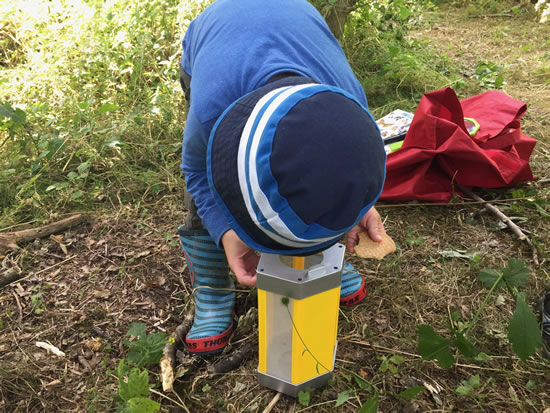
What does nature therapy with children involve?
I wrote about Attention Restoration Theory (Rachel and Stephen Kaplan) in a previous post. Essentially, a nature-based environment helps the brain relax, recover from mental stress and restores emotional equilibrium.
Now, the above doesn’t happen by just standing out in nature, arms outstretched, waiting for the magic to happen. However, the above does happen if the child can be facilitated to spend a number of 2-hour plus sessions ‘being’ in a nature environment where they are encouraged to focus on engaging with activities that are meaningful to them.
What’s meaningful to one child is individual to them. So, for a very young child ‘meaningful’ activities might involve mud play, sawing wood or den building. For an older child they might want to find and identify insects or make something out of wood or learn how to make and cook over a camp fire. The actual engagement with activities is just the first step in a therapeutic process that is tailored to each child, to meet their individual needs.
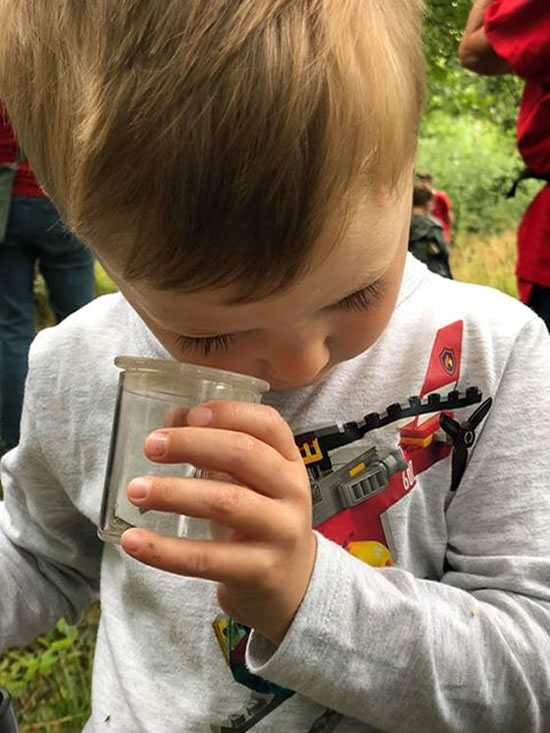

What effect does nature therapy have on a child?
Step 1. The child’s ‘fight or flight’ response in calmed by being out in nature where their attention is taken up by the sights, sounds, scents and tactile things that exists in that environment (Attention Restoration Theory).
Step 2. The underlying purpose of whatever the activity the child shows preference to engage with, is to strengthen their resilience to keep engaged with a task even when tha activity is ‘geared’ to stretch them beyond their comfort zone.
Step 3. When a child experiences success, they feel better inside, just the same as with adults. When you feel better inside, you gain confidence. When you have more confidence, you feel better about yourself. When you feel better about yourself, you are more relaxed and open and less tense and defensive.
Step 4. Coaching the child to bring about ‘change’ in behaviours.
Now, I will just say at this point that delivery of Nature Therapy sessions does require considerable skill, on the part of the Practitioner. Knowing when to ‘push’ and when to ‘support’ is a bit of an Art learned through experience. What I’ve explained above is very generalised I’m not writing this to teach others Nature Therapy ‘method’ but rather to share Nature Therapy ‘how’, in general terms, for parents to help them understand more about the process.
Feedback about Nature Therapy sessions for children
First of all, I’d like to say that different people delivering this kind of work, do so in different ways. As a trained teacher, Forest School Leader and Solutions Focused Therapist, the way I work is very person-centered, utilising a range of what’s called “modalities”. So, depending on what I feel is going to be most helpful to an individual’s needs (whether child or adult) I might include modalities that include Mindfulness, Cognitive Behaviour Therapy, Neuro-Linguistic Programming, Clinical Hypnotherapy and even Eye Movement Therapy. You can find out more about my therapy work at susancollini.com
An Educational Psychologist recently shared a lovely compliment “I just wish we could clone you to work with more children individually.”
A parent has shared “Susan has a unique ability to connect with children, making them feel safe and heard. Her approach is both compassionate and professional, she has created a wonderful woodland environment where my child felt comfortable enough to open up, try new things, learn new skills and express his feelings. My son attended woodland-based sessions over several months and I watched him grow in confidence and self-esteem.”
Another parent shared “My son was really struggling, didn’t want to attend school and was often disruptive during certain lessons. I have to work and was at my wits end to know what to do.
Working with Suan transformed my son from being angry to being more accepting of himself. Working with Susan helped him gain more confidence and self-esteem which had a knock-on effect at school and also at home.”
So, if you’d like to have a chat about the work I do and the support I might be able to provide to your child, or one you are working with, please phone or text me on 07483 234109.
Recent Comments